

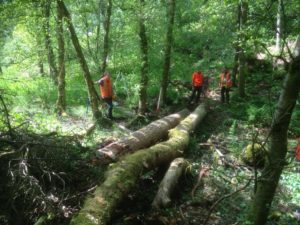
A rainfall-runoff model developed at the University of Leeds is the latest weapon in Calderdale’s efforts to prevent future flooding in the valley. SD-TOPMODEL is currently the only tool able to model the flow of water from hillslopes to the river at a sufficient spatial scale to allow Natural Flood Management (NFM) interventions and land management to be represented accurately for the characteristics of the Calderdale catchment.
An iCASP project using SD-TOPMODEL and starting in November 2018 will contribute to the Calderdale Flood Action Plan by helping to prioritise the siting of future NFM schemes.
 The UKCP18 Regional User Forum will use the release of the updated UK Climate Projections 18 as an opportunity to bring together different sectors of the regional economy to ensure that the latest knowledge is embedded in catchment management decisions. The afternoon event in Leeds on March 8th 2019 will be designed for organisations who need to use UK climate projections for resilience planning and long-term business strategies.
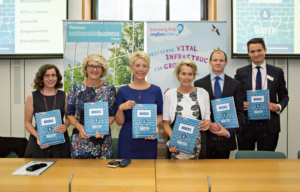 A new report, Bricks and Water, which iCASP helped to inform, has been published by the
 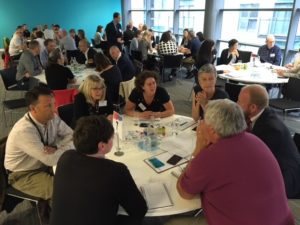 A clutch of project ideas and some very useful feedback have come out of the iCASP Confluence 2018. About eighty delegates from partner organisations and partner universities attended to catch up on project progress, network and share experiences so far.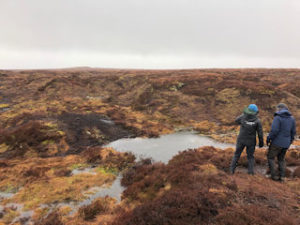
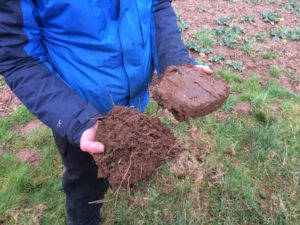 This workshop was a first step towards considering what a soil health index could and should include. A potential follow-on activity could be compiling an advisory briefing for Defra which is looking for ways to assess soil health. Please get in touch with
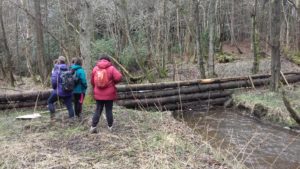 This workshop was an opportunity for people from different catchments across Yorkshire to meet and share learning, experience and approaches to dealing with the inevitable challenges that are generated by pioneering natural flood management (NFM) schemes.