
Weather Show

Following his presentation at the launch of the UK Climate Projections (UKCP18) in November, iCASP’s Ben Rabb, was interviewed on Radio Leeds for the regional Paul Hudson Weather Show. Ben was able to explain how different types of flooding: coastal, fluvial (from rivers) and surface water caused by heavy rainfall are more likely to strike … Read more

New brochure to showcase iCASP projects

A new brochure which gives a brief introduction to projects launched by the Yorkshire Integrated Catchment Solutions Programme (iCASP) is available to download as a pdf. Written in a style accessible to a non specialist audience, each project page outlines the focus of the project, lists the main organisations involved and how long the project … Read more

Defining a Future for Yorkshire Farming

The iCASP Public Goods Project has produced some resources which will be showcased at the Defining a Future for Yorkshire Farming today (Nov 15th 2018). The one day conference hosted by the Yorkshire Food farming and Rural Network is expecting Secretary of State, Michael Gove, to attend as keynote speaker. The National Farmers’ Union, one … Read more

Turning Yorkshire Green Blue

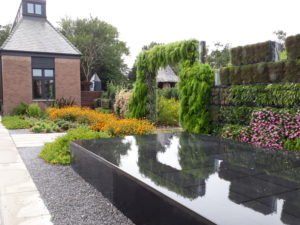
Green walls and water feature to enhance property value

A new iCASP partnership is forming to dissolve the barriers which prevent investment in natural landscaping in urban areas. Natural landscape features such as ponds, rows of trees, roofs or walls planted with greenery are just a few common examples of what is described as Green Blue Infrastructure (GBI).

In spite of its benefits, which include natural cooling, improving air quality, providing wildlife habitats and making urban areas more attractive, planners struggle to make a persuasive business case for GBI investment.

Now a strong multi-disciplinary team in partnership with stakeholders in Leeds City region and West Yorkshire are determined to lead the way in improving cost-benefit analysis and valuation of Green Blue Infrastructure. They want to bring HM Treasury on board too!
Read more

Prioritising Natural Flood Management interventions in Calderdale

Photo Courtesy: Slow the Flow

A rainfall-runoff model developed at the University of Leeds is the latest weapon in Calderdale’s efforts to prevent future flooding in the valley. SD-TOPMODEL is currently the only tool able to model the flow of water from hillslopes to the river at a sufficient spatial scale to allow Natural Flood Management (NFM) interventions and land management to be represented accurately for the characteristics of the Calderdale catchment.

An iCASP project using SD-TOPMODEL and starting in November 2018 will contribute to the Calderdale Flood Action Plan by helping to prioritise the siting of future NFM schemes.

Read more

UKCP18 Regional Forum

The UKCP18 Regional User Forum will use the release of the updated UK Climate Projections 18 as an opportunity to bring together different sectors of the regional economy to ensure that the latest knowledge is embedded in catchment management decisions. The afternoon event in Leeds on March 8th 2019 will be designed for organisations who need to use UK climate projections for resilience planning and long-term business strategies.
IF INTERESTED, Quick email to:  [email protected]


Read more

Better land management for a multifunctional landscape

Credit: DCRT

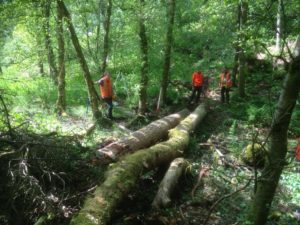
The latest iCASP Project will help advise the Don Catchment Rivers Trust on their Hidden Heritage Secret Streams project. This is based on the Upper Rother Catchment, a tributary of the River Don. One of the aims of the project is to improve the way land is managed so that it provides both social and heritage benefits.

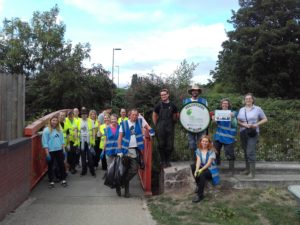
Volunteers will be recruited to put in place small and simple changes to reduce river pollution from different sources, slow the rate at which water flows down the river, and make it easier for different species to flourish by ensuring suitable habitats are connected up in the landscape.

At the moment, it’s difficult to prioritise what should be done because there isn’t enough available information on the different options and whether they can be carried out by volunteers. This is where iCASP can add most value.

Read more

Bricks and Water

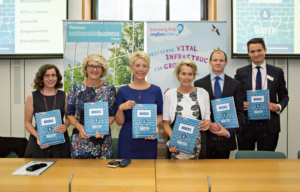
A new report, Bricks and Water, which iCASP helped to inform, has been published by the Westminster Sustainable Business Forum, an off shoot of Policy Connect.
It sets out an action plan for better management of water to deliver water-efficient homes at volume, that are resilient to flooding and calls for a ‘Bricks and Water’ sustainability code with a change in building regulations to provide a stable long-term planning framework.

Read more

Eyeing up our rivers

Photo courtesy: Sheila Palmer, University of Leeds

The latest iCASP Project, The Derwent Data Finder, will  explore whether a collaborative monitoring system could help the Environment Agency to reduce costs and to gather more information. The Environment Agency currently spends 60 million pounds a year gathering information on the state of the water environment to meet regulatory requirements.

However, many other organisations, including iCASP partners and universities, also collect relevant data which if shared might fill existing knowledge gaps and prevent duplication.

Read more

Spring call for new projects

iCASP is once again inviting expressions of interest for iCASP projects.

If you have an idea please complete the 6 page Expression of Interest (EOI) document that you can download from the link below.

Read more