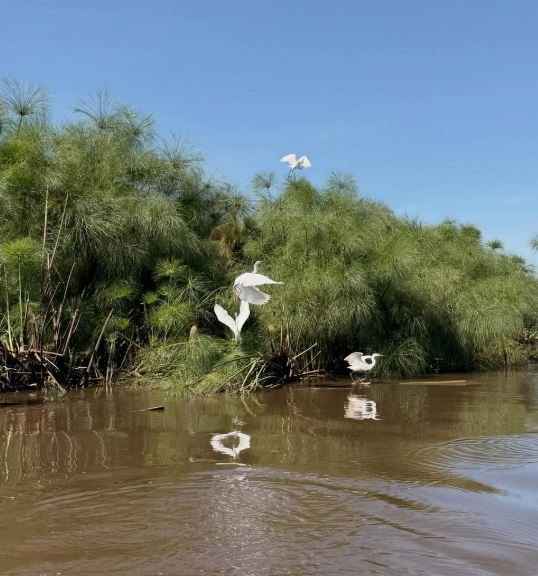
Pictured: Dunga Swamp in Kisumu, Kenya courtesy of the Venice Agreement
Laura Harrington, one of the two UK WaterLANDS artists-in-residence, was invited to take part in the Third Biannual Global Workshop of the Venice Agreement (VA) on peatlands in Kisumu, Kenya (2 – 5 June 2026). She was representing her work with peatlands in the UK and through WaterLANDS.
Her participation in the event was supported by the Venice Agreement (VA) and the United Nation’s Environment Programme-led Global Peatlands Initiative and hosted by Ecofinder Kenya.
Timed to coincide with World Peatlands Day 2026, the gathering amplified the significance of peatlands across social, cultural and environmental perspectives, locally and globally.
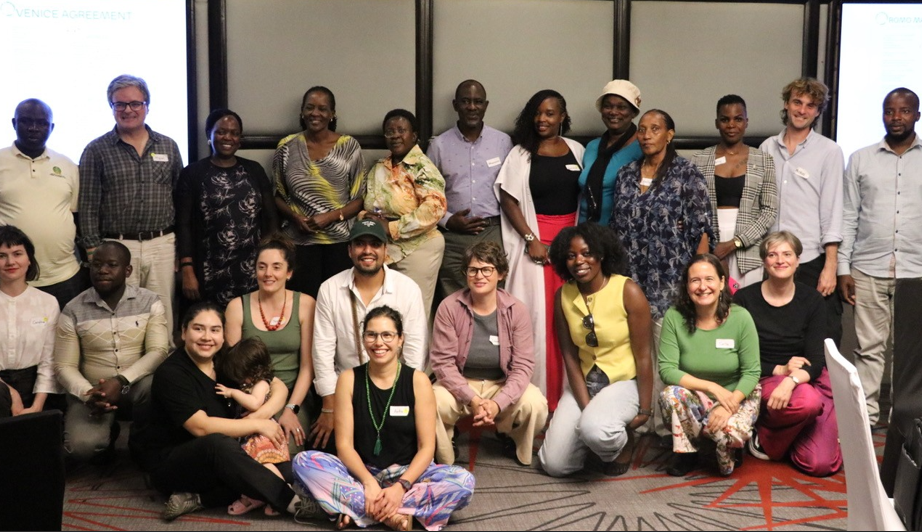
This year the VA gathering was held in the papyrus wetlands of Nam Lowle / Lake Victoria – the second-largest freshwater lake in the world and one of Africa’s most vital yet vulnerable peat-forming ecosystems. Laura joined a network of around 35 peatland custodians and collaborators – including artists, scientists, indigenous leaders, activists, conservation practitioners, community organisers and funders – from Africa, the Americas and Europe – to exchange experiences and respective work protecting peatlands and work towards a shared agreement in light of new challenges. During the week, participants exchanged knowledge and strengthened relationships rooted in reciprocity and care.
“Having been part of the Venice Agreement network and movement since its inception in 2022, it was very special to have the opportunity to be in Kisumu among such a gathering of peat-people from all over the world.
“To be invited and valued as an artist in this context — to bring my work and broader experiences through my work with WaterLANDS to such a vital and timely discussion — was affirming. Across continents and borders, policies and governments, peatlands were the common language we all shared.” said Laura Harrington
The Venice Agreement gathering has become a vital network that has grown since 2022 into a living community and practice for coming together as artists, scientists, and local people, locally, culturally, globally.
“This gathering centres around the ecological realities, histories and futures of East African peatlands and the communities who care for them,” added Laura.
“We heard from people working on peatland conservation initiatives from Kenya and neighbouring countries who highlighted both the challenges and the opportunities.
“They spoke from different environmental contexts how these peatlands are living territories sustaining fishing communities, water systems, papyrus craft traditions, and complex more-than-human relationships, yet are continually facing pressures from drainage, climate change, burning, land conversion and systemic forces.”
Leonard Akwany, from Ecofinder Kenya, spoke in Kisumu about how awareness of Africa’s 40 million hectares of peatlands is growing beyond the Congo Basin. At the opening event he was smiling at the sight of bringing the Venice Agreement and its vital community-driven conservation to Kisumu.
Pictured: Third Global Workshop of the Venice Agreement (VA) on peatlands in Kisumu, Kenya, 2026, courtesy of Venice Agreement (Fernanda Olivares)
What is the Venice Agreement?
The aim of the Venice Agreement is to draw international attention to the preservation and restoration of peatlands for climate and people.
Rooted in the growing global peatland movement and emerging from the eco-cultural collaborations of Turba Tol Hol Hol Tol (the Chilean Pavillion at the Venice Art Biennial in 2022), the VA explores peatlands not as isolated sites, but as loving territories shaped by ecological memory, cultural practice, reciprocity and collective care. It seeks to nurture forms of collaboration grounded not only in conservation, but in reciprocity, humility, cultural continuity, and collective responsibility towards the living world that sustains us. The first Venice Agreement was shared on World Peatland Day June 2022, in Venice, when artists, scientists and representatives from indigenous peoples, climate policy, nature conservation and the business community came together from all over the world. Laura Harrington as well WaterLANDS partners, the Michael Succow Foundation and We are here Venice played key roles in the workshop.
What are Underground Workshops?
Ahead of the 2026 International Workshop in Kisumu, 18 ‘Underground Workshops’ were held across 21 countries and in nine languages, activating local knowledge, action and solidarity around the world’s peatlands – from Argentina to Uganda, Australia to Norway.
These underground workshops were organised by people working with peatlands. One of them formed part of the WaterLANDS Grand General Assembly meeting in Estonia, which Laura organised and together with artists from the different Action Sites, fed their perspectives and experiences directly into the Venice Agreement on-the ground workshop in Kisumu.
In preparation for the Venice Agreement gathering, an ‘Underground Workshop’ (one of 18 across 21 countries) was held as part of the WaterLANDS Grand Assembly meeting in Estonia to get views from all the artists to feed into the Venice Agreement at a grassroot level.
The idea is that local workshops are held simultaneously across continents, so that voices, stories, songs, questions, and friendships rise from the earth and bubble up overground at the gathering in Kisumu. In this way the workshop in Kisumu served as an editorial gathering, working with the results of the underground workshops from around the world: systematising what emerged locally, and building toward a shared understanding of the themes and commitments that define the VA’s 2026 objectives.
The WaterLANDS artist perspectives fed into the development of a living menu of practical, value-based approaches to peatland protection. There were seven different challenges outlined as part of last VA discussion: –
- Lack of environmental education and public awareness regarding peatlands
- Poor legal and political frameworks
- Peatland threat control
- Cultural attitudes and traditional livelihood
- Scientific information availability
- Insufficient collaborative spaces
- Lack of funding.
Underground Workshop in Estonia with WaterLANDS artists
In their Underground Workshop, the WaterLANDS artists approached the challenge of cultural attitudes and traditional livelihoods not by focusing on what damages peatlands, but by exploring how artistic practice can support more balanced, caring relationships with these ecosystems. Central to their discussion was the question of how artists are valued within conservation.
The group reflected on reframing relationships with peatlands through slower, more sensory ways of knowing; attending to local stories, folklore, and non-human presences; drawing parallels between landscape and human healing; and advocating for fair, non-extractive working conditions for artists as a mirror of non-extractive relationships with land. Together, these perspectives pointed toward what artists uniquely bring to conservation — independent, critical voices capable of making visible what data alone cannot show, and of creating the conditions for genuinely open conversation.
The second need was physical and place-based: a case for longer-term, embedded models of collaboration rooted in communities — functioning something like libraries or creative field stations — rather than short-term project visits where knowledge is taken and people move on.
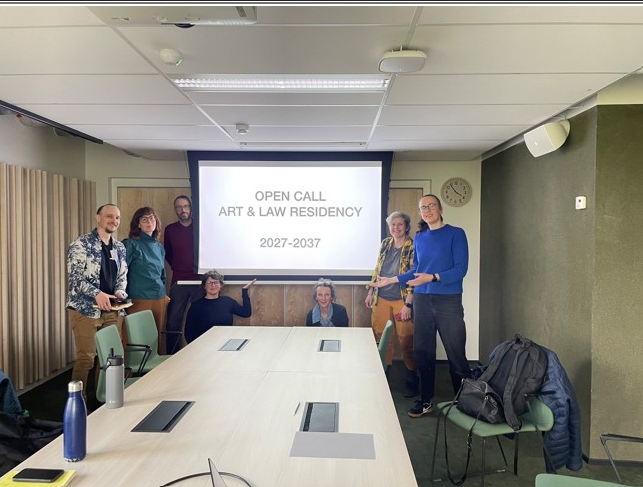
When asked to imagine a social media post showcasing their work to the wider VA community, the artists called for an open 10-year Art & Law Residency for Peatlands, bringing together artists, lawyers, scientists, and communities in long-term relationships with wetland landscapes and the people tied to them. (see bottom image)
What happened in Kisumu?
This year’s meeting focused on showcasing Africa’s diverse peatlands, strengthening global peatland networks, agreeing on the evolving infrastructure of the Agreement, advancing reciprocal commitments led by local stewards, and co-creating a living menu of practical, values-based approaches to peatland conservation. Participants engaged in exchanges, artistic programming, field visits to Dunga and Yala Swamp and collaborative discussions focussed on peatland protection, restoration, and reciprocal approaches to ecological care. Themes running throughout the 2026 gathering included decolonial conservation, rights of peatlands, ecological and language justice, community-led stewardship, legal innovation, cultural revitalisation, and practices of care between human and more-than-human communities.
“The Kisumu gathering was an incredible coming together of people, places, and habitats,” said Laura.
“Over four days, so much was covered — all held carefully, considerately, and joyfully by the organisers and hosts. From spontaneous peatland-focused exercises where we stepped into different stories and perspectives, to the sharing of experiences through drawing and writing. There was so much exchange — in the curated moments of the workshop, but also in all the spaces in between, in conversation and in simply being in Kisumu together.
“Peatlands were our commonality across languages and continents.”
Some of the activities that happened during the gathering were:
The Peatland Communities Map
Developing a map to be a growing record of the communities caring for peatlands around the world, the stories they carry, the initiatives they have built, and the knowledge they choose. It gathers information about who is doing the work and about the local initiatives they have built to protect the peatlands they call home.
WETSOUND Radio
A participatory mobile radio station airing from Dunga Swamp, Kisumu, Kenya sharing the music and sounds from the swamps as well as stories, laughter, conversations, cultural practices conservation and restoration experiences shared by peatland custodians from the region, the African continent and the world.
A mobile radio station airing from Dunga Swamp, Kisumu, Kenya featuring the sounds of swamps, songs, stories, conversations, laughter, field recordings, and the many voices of peatlands speaking through their custodians.
A Living Menu of How-To’s
A community-built resource of practical tools and methodologies from VA custodians.No single community holds all the answers – together they are accumulating a remarkable body of practical wisdom.
A community-built resource of practical tools and methodologies from VA custodians.No single community holds all the answers – together they are accumulating a remarkable body of practical wisdom.
Pictured below: WaterLANDS artists Venice Agreement Underground Workshop in Estonia. Photo by Caitriona Devery