
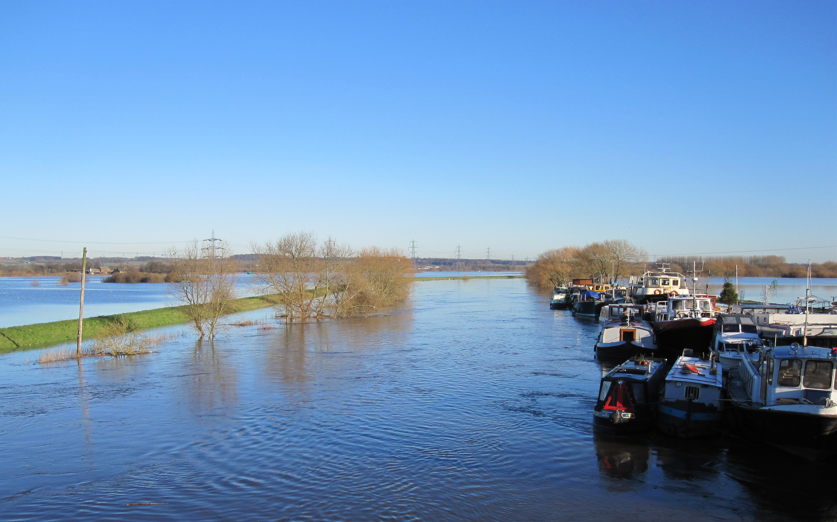
Pictured: Downsteam of Methley Bridge, River Calder.
Have you been flooded or do you live in a West Yorkshire community that is at risk of flooding?
If so, please take just 10 minutes to complete this survey and share it with anyone you know who may be interested before the end of January 2026.
It is part of a new research project to help reduce the impact on the mental health of flood victims and provide them with the vital support they need.
The large-scale online survey is being carried out by researchers at the Healthy Housing Initiative, University of Huddersfield as part of a West Yorkshire Flood Innovation Programme project, led by Kirklees Council and supported by the Environment Agency.
Their target is to carry out 500 surveys before the end of January 2026 and also 50 more in-depth interviews with residents and business owners about how they have been affected by flooding.
The findings will be used to gather evidence to inform the delivery of mental health services for people affected by flooding.
Take part in the survey
Early findings from mental health needs assessment
Early findings show that people who have had the inside of their homes and premises flooded suffer high distress than those whose gardens and neighbourhoods have been affected. The type of symptoms reported include depression and anxiety, low mood, uncontrollable worry and PTSD symptoms such as intrusive memories, distress at reminders and concentration issues.
Flooding is experienced not as an isolated event but as an ongoing cycle of threat, fear and anticipation. Heavy rain alone can be enough to trigger heightened tension.
Some of the comments made include:
Tension rises when we get all those near misses, not just for me but for everybody around the town. Even the window cleaner sets me off. It’s the water straight on to the window that’s triggering for me.
Participants described taking extensive measures to protect their homes with preparedness becoming a form of hypervigilance that’s emotionally and financially draining.
I’ve done everything I can to stop my house being ripped out again – underfloor heating, a coal fire, all of it. I’ve had to do it myself and it’s exhausting.
COLIF Fellowship – Kirklees Climate Resilience and Mental Health Resilience
Also supporting this project is a COLIF Fellowship – Kirklees Climate Resilience and Mental Health Resilience hosted by Kirklees Council and WYFLIP and will run until March 2026 This is an Economic and Social Research Council funded programme supporting university and community collaboration to reduce regional inequalities.
The aim is to understand the mental health impacts of flooding and other climate hazards and identify gaps in support and how to be better prepared. It is also to explore opportunities for prevention and building resilience across housing, health, emergency services, third sector and local authorities.
The plan is to run five workshops with communities and services to identify barriers and realistic opportunities to work together.
The goal is to come up with practical recommendations in a good practice guide for agencies to improve their preparedness and support and influence future policy makers.
A report on the findings of both the mental health needs assessments and workshops will be produced and a new network of academics and policy makers for climate related mental health and resilience created to support the recommendations.